Is home automation worth it, and does it add resale value?
What buyer surveys, listing studies and federal energy data actually show about smart home value, where the evidence is strong, where it is thin, and how to spend so the money holds up.
The short answer
Home automation is usually worth it for the people who live with it, and only sometimes for the people who buy the house later. The best evidence supports three things:
- Buyers like specific features, especially thermostats, cameras, doorbells and lighting control.
- Listings that mention some smart features sell a bit faster than similar homes, according to Zillow’s analyses.
- Smart thermostats save a measurable amount of energy, according to ENERGY STAR field data.
What the evidence does not show is a reliable dollar premium at resale for a whole-home control system. If you are automating mainly to raise your sale price, the data does not back that plan. If you are automating because you will use it, and you want the money to hold up, the rest of this guide shows how.
This guide is not financial or tax advice. Talk to a real estate professional or financial adviser about your situation.
What buyer surveys say
NAHB: what buyers really want (2024)
The National Association of Home Builders surveys recent and prospective buyers every few years. Its 2024 edition covered more than 3,000 people and asked them to rate 19 technology features on a four-point scale, from essential to do not want. NAHB reported that 16 of the 19 features were rated essential or desirable by at least half of buyers. The top four:
Share of recent and prospective buyers, 2024
Each bar is the share of more than 3,000 surveyed buyers who rated the feature essential or desirable.
View the data
| Essential or desirable | |
|---|---|
| Programmable thermostat | 78% |
| Security cameras | 76% |
| Video doorbell | 74% |
| Wireless home security system | 70% |
NAHB said a lighting control system, multi-zone HVAC and an energy management display also made the top eight. The pattern is clear: buyers want technology that saves energy or improves safety. Whole-house audio and theater are wants for some buyers, not broad expectations.
Note that “desirable” is not “will pay more for.” A feature can make a home more appealing without changing what a buyer offers.
Coldwell Banker and T3 Sixty: older, but still useful
Coldwell Banker ran several smart home surveys in the mid-2010s. In 2015, a Coldwell Banker and CNET survey of about 4,000 Americans found that 81% of people who already used smart home products said they would be more likely to buy a home with smart technology already installed. That is a group that already liked the technology, so it overstates interest among all buyers.
In late 2017, research firm T3 Sixty surveyed 3,027 real estate agents and brokers for Coldwell Banker. Nearly four in five (78.8%) said buyers are willing to pay more for a smart home, but only 21.3% said buyers would always or very willingly pay a premium. Agents reported that buyers asked most about security (36.4%), energy management (26.7%) and entertainment (21.8%).
These surveys are more than seven years old. We found no newer Coldwell Banker smart home survey. Treat them as history that matches the newer NAHB data, not as current pricing evidence.
What listing studies say
Surveys tell you what people say. Listing studies look at what homes actually sold for. Zillow has run several analyses that compare how homes whose listing descriptions mention a feature sold, relative to what Zillow expected for similar homes.
The smart home results are about speed, not price:
- In Zillow’s 2020 analysis of 2018 and 2019 sales, “smart sprinkler system” was linked to selling 15.1 days faster than expected and “smart light” 7.3 days faster. No smart feature appeared on its price-premium list.
- In its 2022 analysis of 3.1 million sales from 2020 and 2021, EV charging stations were linked to selling 9.5 days faster, programmable thermostats 6.0 days, smart sprinkler systems 4.9 days and smart lights 3.6 days. Zillow reported no price premium for any of these.
- In its 2023 analysis of nearly 2 million 2022 sales, doorbell cameras were linked to selling 5.1 days faster.
Days faster than expected, from Zillow listing-description studies
Longer bars mean listings that mentioned the feature sold faster than comparable homes; the effect shrank between studies, and none showed a reported price premium.
Source: Zillow press releases, March 2020, April 2022 and April 2023
View the data
| Days faster | |
|---|---|
| Smart sprinkler system (2018-19 sales) | 15.1 days |
| EV charging station (2020-21 sales) | 9.5 days |
| Smart lights (2018-19 sales) | 7.3 days |
| Programmable thermostat (2020-21 sales) | 6 days |
| Doorbell camera (2022 sales) | 5.1 days |
| Smart sprinkler system (2020-21 sales) | 4.9 days |
| Smart lights (2020-21 sales) | 3.6 days |
Read these numbers carefully. Zillow itself has said it cannot prove the features cause the results, and that the features may signal overall home quality. Homes that mention smart lights may be newer, better kept or better marketed. The features were identified from listing text, not checked in the house. And the effect for smart lights and sprinklers was smaller in the later study.
The “smart homes cost twice as much” headline
You may see a 2025 study from Vivint, a home security company, reporting that homes listed with smart home keywords averaged $1,224,763, nearly double the $663,847 for other homes. The study used recent Redfin listings in the 100 most populous US cities, pulled in February 2025. It does not show that technology added that value. More expensive homes are simply more likely to have, and advertise, smart features. The same study’s survey of 1,000 Americans found 28% would pay extra for a smart home, an average of $18,056 by their own estimate. Self-reported willingness to pay is a weak predictor of real offers.
What remodeling-value studies say
The National Association of Realtors’ 2025 Remodeling Impact Report, produced with the National Association of the Remodeling Industry, estimates how much of a project’s cost is recovered at resale. Smart home and automation projects are not among the projects it scores. We could not find a widely used appraisal method that assigns a standard value to home automation. That does not mean the value is zero. It means it is not measured in a way you can count on.
Energy savings: the part you can measure
Energy savings are the strongest financial case for some smart home features, and the data comes from federal sources.
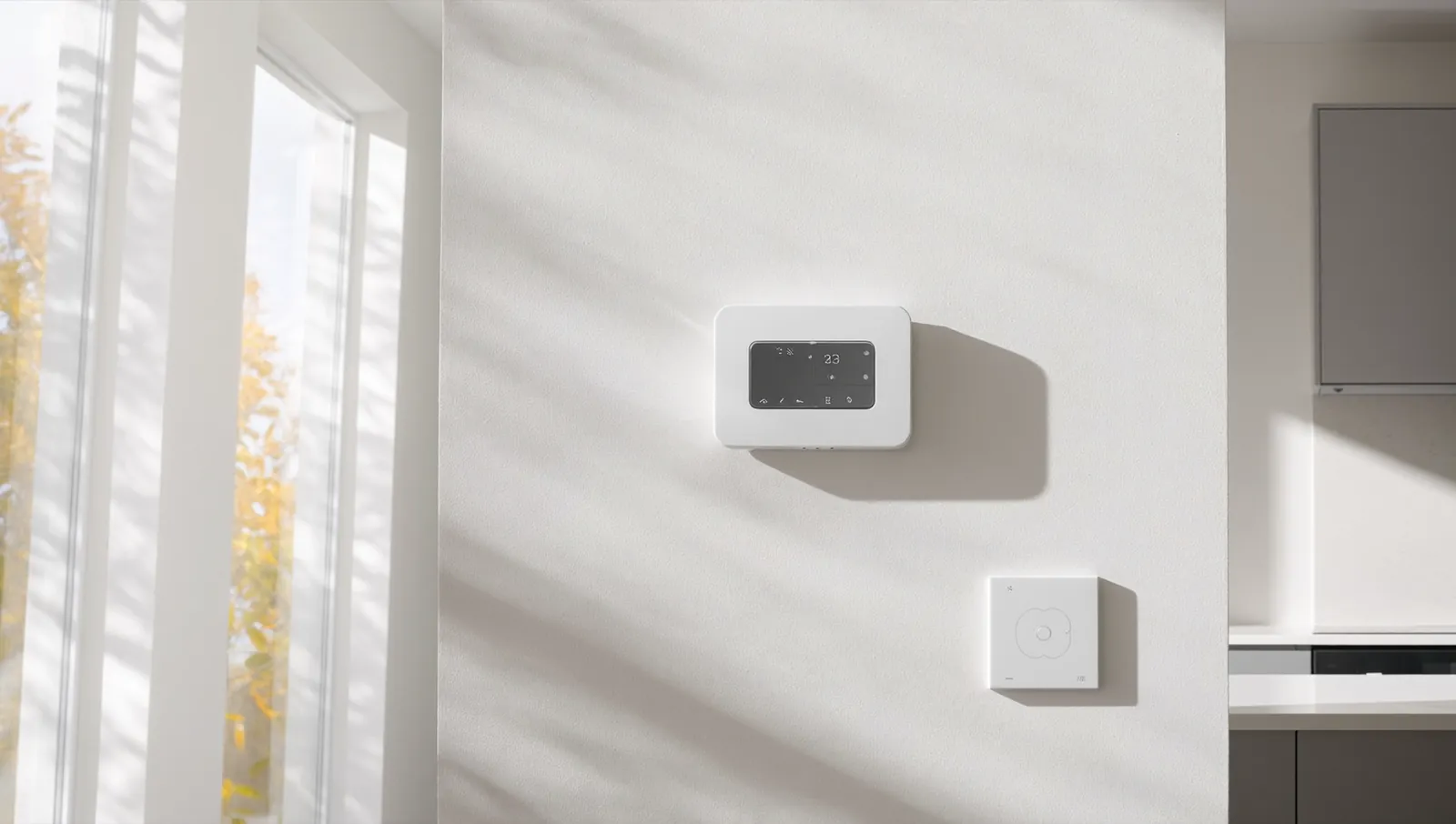
Smart thermostats. ENERGY STAR, run by the US Environmental Protection Agency, certifies smart thermostats using a year of real field data from homes across the country. It says that, on average, certified smart thermostats save about 8% of heating and cooling bills, or about $50 a year. It also says homes with high heating and cooling bills could save up to $100 a year. To be certified, a thermostat’s field data must show an annual cooling run-time reduction of at least 10% at the lower 95% confidence limit of the weighted national average (8% for heating), which matters in Texas, where cooling dominates the summer bill.
ENERGY STAR adds caveats: savings vary with climate, comfort preferences, occupancy and equipment. Homes that are occupied all day tend to save less, and EPA does not recommend estimating savings for a specific home from the national average.
Setbacks. The US Department of Energy has advised that setting back your thermostat for at least 8 hours a day can save as much as 10% a year on heating and cooling costs. A smart thermostat or automation system makes that happen without anyone remembering. If you have a heat pump, ask your HVAC contractor how deep a setback makes sense before you program one.
Here is how the ENERGY STAR average plays out at different annual heating and cooling costs. To use it, estimate your own yearly heating and cooling spend from your bills. In an all-electric DFW home, the summer months above your spring and fall baseline give a rough idea of cooling cost.
Estimated yearly savings from a smart thermostat
Each bar applies ENERGY STAR's 8% national average to an annual heating and cooling cost; your actual result depends on your home and habits.
Source: Dallas Automation calculation from ENERGY STAR's average savings of 8% of heating and cooling bills
View the data
| Estimated savings at 8% | |
|---|---|
| $600 a year | $48 |
| $1,000 a year | $80 |
| $1,500 a year | $120 |
| $2,000 a year | $160 |
Other systems. We did not find federal residential data that puts a reliable savings number on motorized shades or whole-home lighting control in single-family homes. Shades can reduce solar heat gain on sunny glass, and scenes can keep lights off in empty rooms, but the savings depend so much on the house that we will not quote a figure. Check the ENERGY STAR Rebate Finder for thermostat rebates in your ZIP code.
So, is it worth it?
Think about value in three buckets.
1. Value you use every day
This is where most of the payoff is. Lights that set themselves at sunset, shades that close before the afternoon sun hits the living room, music in every room from one app, a thermostat that adjusts when you leave. None of it shows up on an appraisal, but it is why people buy these systems. If you will use it daily for years, it is often worth it on those terms alone.
2. Value you can measure
Energy savings from smart thermostats are real but modest: about $50 a year on average, up to about $100 in high-bill homes, according to ENERGY STAR. That is a reason to choose a smart thermostat, not a reason to buy a $30,000 system.
3. Value at resale
The evidence suggests smart features help a home appeal to buyers and may help it sell faster. It does not show a predictable price premium. Plan as if you will recover some of the cost of infrastructure and little of the cost of gadgets.
How to spend so the value holds up
Some parts of a smart home age well. Others do not.
Holds value well: – Structured wiring and conduit. Ethernet to access points and TVs, speaker wire, shade wiring and conduit stay useful through many generations of gear. – A solid network. Wired access points and a proper equipment closet help any future owner, whatever devices they use. – Motorized shades and quality lighting control. These are physical upgrades the next owner keeps using, and lighting control and energy management were in NAHB’s top eight tech features. – Thermostats, cameras and video doorbells. These are what buyers in the NAHB survey said they want most.
Holds value poorly: – Proprietary systems that only one dealer can service. A new owner may see them as a liability. – Features tied to a lapsed subscription. Savant’s subscription terms, for example, say subscription-only features stop when the subscription ends; Control4 Connect has been optional for new X4 systems since November 2025, but remote access and HomeKit integration depend on it. – Fast-aging hardware. Touchscreens and media players age like phones.
If you plan to sell in the next few years
- Spend on what buyers ask for: thermostat, video doorbell, lighting control in main rooms, a strong network.
- Document everything. A one-page system guide, the dealer’s contact, account transfer steps and any subscription dates.
- Plan the hand-off. Remove your personal accounts and transfer the system to the buyer. Savant’s terms say it may let unused prepaid subscription time stay with the system after a sale, though that is not guaranteed.
- Describe features in the listing. Zillow’s data is about features mentioned in listing descriptions, so use the specific terms (for example, “smart lights,” “EV charger”).
- Do not over-improve. A theater or whole-home audio system rarely recovers its cost if the next buyer did not ask for it.
Security cameras, alarm systems and electronic access control are regulated in Texas by the Department of Public Safety’s Private Security Program under Occupations Code Chapter 1702, which requires, for example, a license to act as an alarm systems company or an electronic access control device company. Use a properly licensed company for that work. And any line-voltage work, such as new switches, dimmers or shade power, must be done by an electrician licensed by the Texas Department of Licensing and Regulation.
What to do next
Decide why you are automating. If it is for daily life, list the rooms and routines that matter and spend there first. If resale matters, put the money into wiring, networking, shades, lighting control in main rooms and a smart thermostat, and keep the paperwork that makes the system easy to hand over. Then get quotes that list yearly fees and state what keeps working without them.
If you are in Dallas–Fort Worth, we are happy to look at your plans and help you decide what is worth doing.
Frequently asked questions
Does a smart home increase property value?
There is no large, current study showing a predictable price premium for home automation. Zillow’s studies link some smart features to faster sales, and NAHB’s survey shows buyers want thermostats, cameras and lighting control. Expect modest, hard-to-measure resale value and plan your spending around daily use.
What smart home features do buyers want most?
In NAHB’s 2024 survey, programmable thermostats (78%), security cameras (76%), video doorbells (74%) and wireless security systems (70%) were most often rated essential or desirable. Lighting control, multi-zone HVAC and energy management displays also ranked in the top eight.
How much does a smart thermostat save?
ENERGY STAR says certified smart thermostats save about 8% of heating and cooling bills, around $50 a year on average and up to $100 for homes with high bills. Results vary with climate, occupancy and equipment.
Do smart homes sell faster?
Zillow’s listing studies found homes mentioning smart lights, smart sprinklers, EV chargers and doorbell cameras sold several days faster than comparable homes. These are associations, and Zillow has said it cannot prove the features cause the results.
Should I install a smart home system before selling?
Usually only small, broadly wanted items, such as a smart thermostat, video doorbell or better Wi-Fi. A large system installed just before a sale is unlikely to recover its cost. Ask your listing agent what buyers in your price range expect.
Sources
- Home Buyers Want Technology to Improve Energy Efficiency and Increase Safety, NAHB Eye on Housing, 2024
- Coldwell Banker Real Estate and CNET Survey Finds Americans Ready for the Smart Home, RISMedia, 2015
- Smart Homes: An Emerging Real Estate Opportunity, T3 Sixty and Coldwell Banker, 2018
- Fixer-Upper Effect Lingers: Buyers Pay 10 Percent More for Modern Farmhouses, Zillow, 2020
- Eco-Friendly Features Help Homes Sell Up to 10 Days Faster, Zillow, 2022
- She Sheds, Steam Ovens Can Help Sell Homes for Up to $17,400 More, Zillow, 2023
- Smart Homes 2025: Trends, Pricing, and Buyer Insights, Vivint, 2025
- 2025 Remodeling Impact Report, National Association of Realtors and NARI, 2025
- Smart Thermostat FAQ, ENERGY STAR (US EPA)
- Smart Thermostats, ENERGY STAR (US EPA)
- Thermostat setback guidance, US Department of Energy email bulletin, February 2024
- Savant Subscription Terms, Savant, updated October 2026
- Connect Is Now Optional for New X4 Systems, ADI | Snap One, 2025
- Private Security, Texas Department of Public Safety
- Occupations Code Chapter 1702, Private Security, Texas Legislature
- Electricians, Texas Department of Licensing and Regulation
More from the Journal
Tunable white and circadian lighting: what the research actually shows
Light at the eye affects your body clock, and the science now gives real numbers. Here is what is proven, what is not, and how a lighting control system puts the numbers to work at home.
Control4 vs Savant vs Crestron: which smart home system fits your home?
How the three big professional platforms compare on interfaces, dealers, programming, yearly fees and long-term support, plus where Josh.ai, Lutron-only systems and DIY options like Home Assistant and Apple Home fit.
How to keep your AV and network closet cool in a Texas home
A home equipment rack turns electricity into heat all day, every day. Here is how to calculate that heat, why the attic is the wrong place for it, and when vents, fans or a mini-split make sense.
Planning a project in Dallas–Fort Worth?
Tell us about the house. You get a clear scope and a price range back.